LIVE REPORT - WHITE STAGE 7/24 FRI
ENG: SON ROMPE PERA

Cumbia is the new punk: Son Rompe Pera turns Fuji Rock into Mexico's wildest street party
Punk isn’t dead. It just traded power chords for a marimba.
That was the unmistakable message from Mexico City’s Son Rompe Pera, who transformed Fuji Rock’s White Stage into a joyous, dust-filled cumbia riot Friday afternoon, proving that the rebellious spirit of punk can thrive just as easily through traditional Mexican instruments as distorted guitars.
Their slogan, emblazoned on T-shirts and shouted throughout the set, says it all:
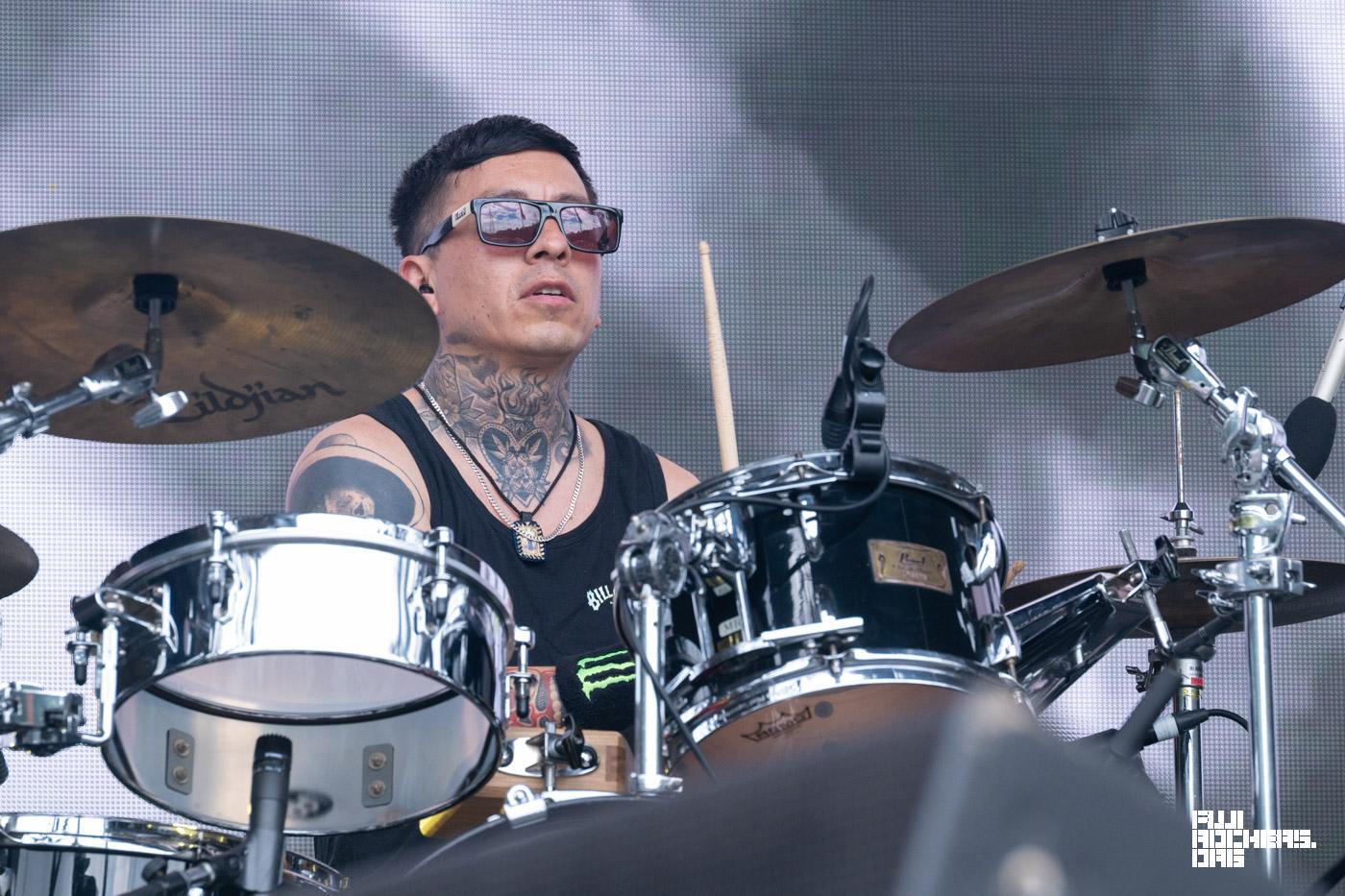
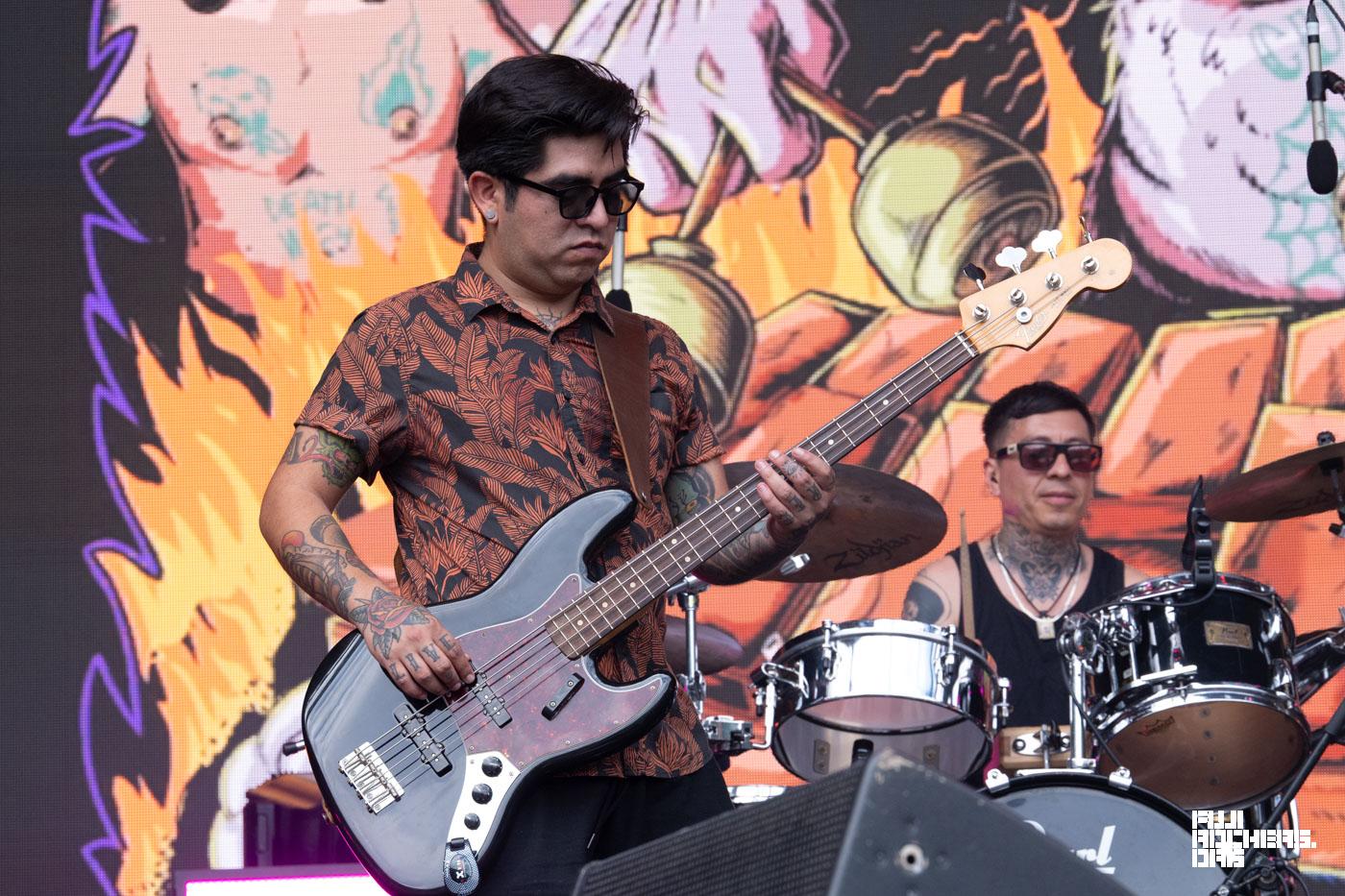
“Cumbia Is the New Punk.” For an hour, the five-piece band blurred the line between concert and street party, mixing cumbia, punk, ska, garage rock and surf music into one of the most exhilarating performances of Fuji Rock’s opening day.
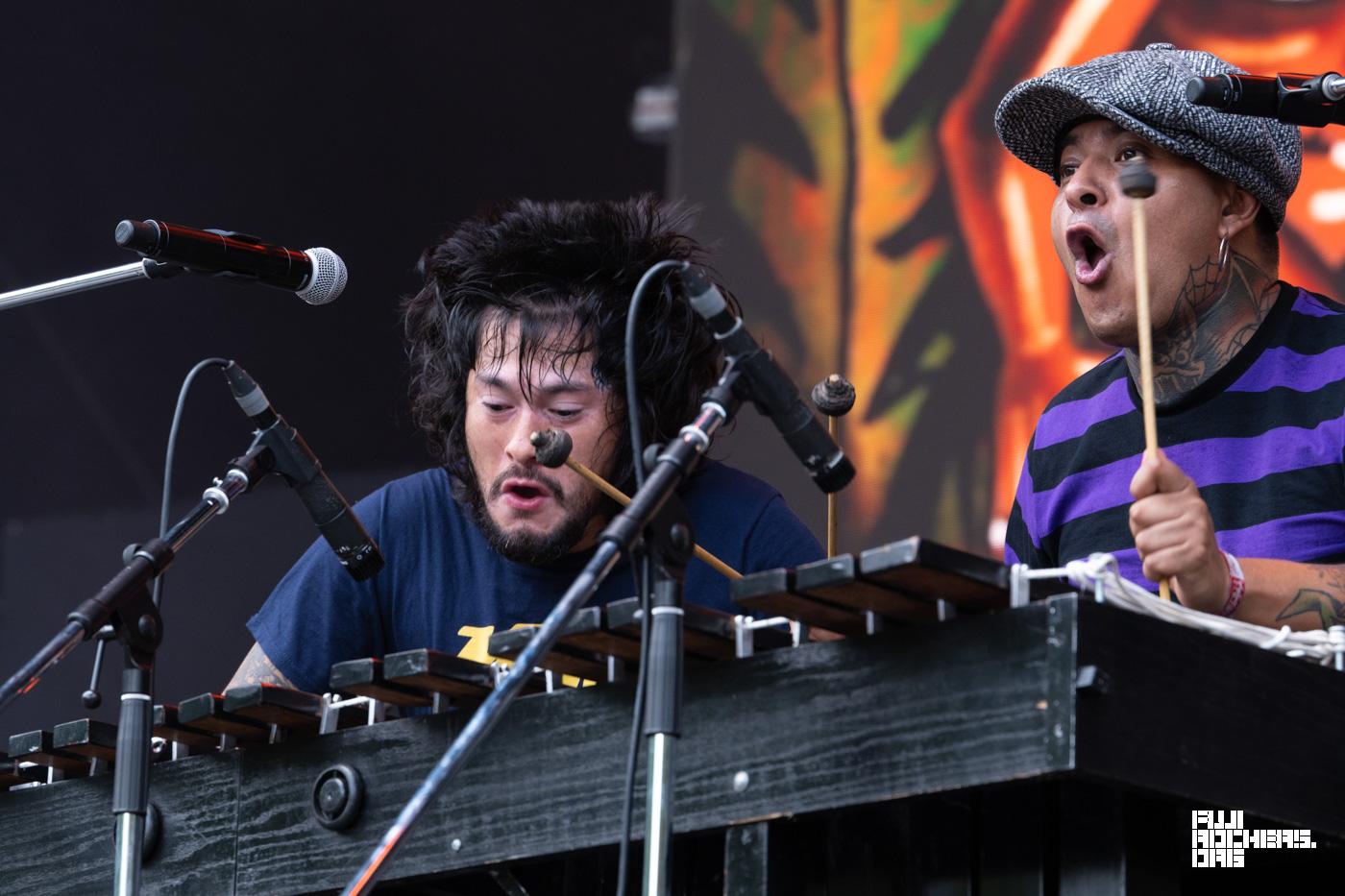
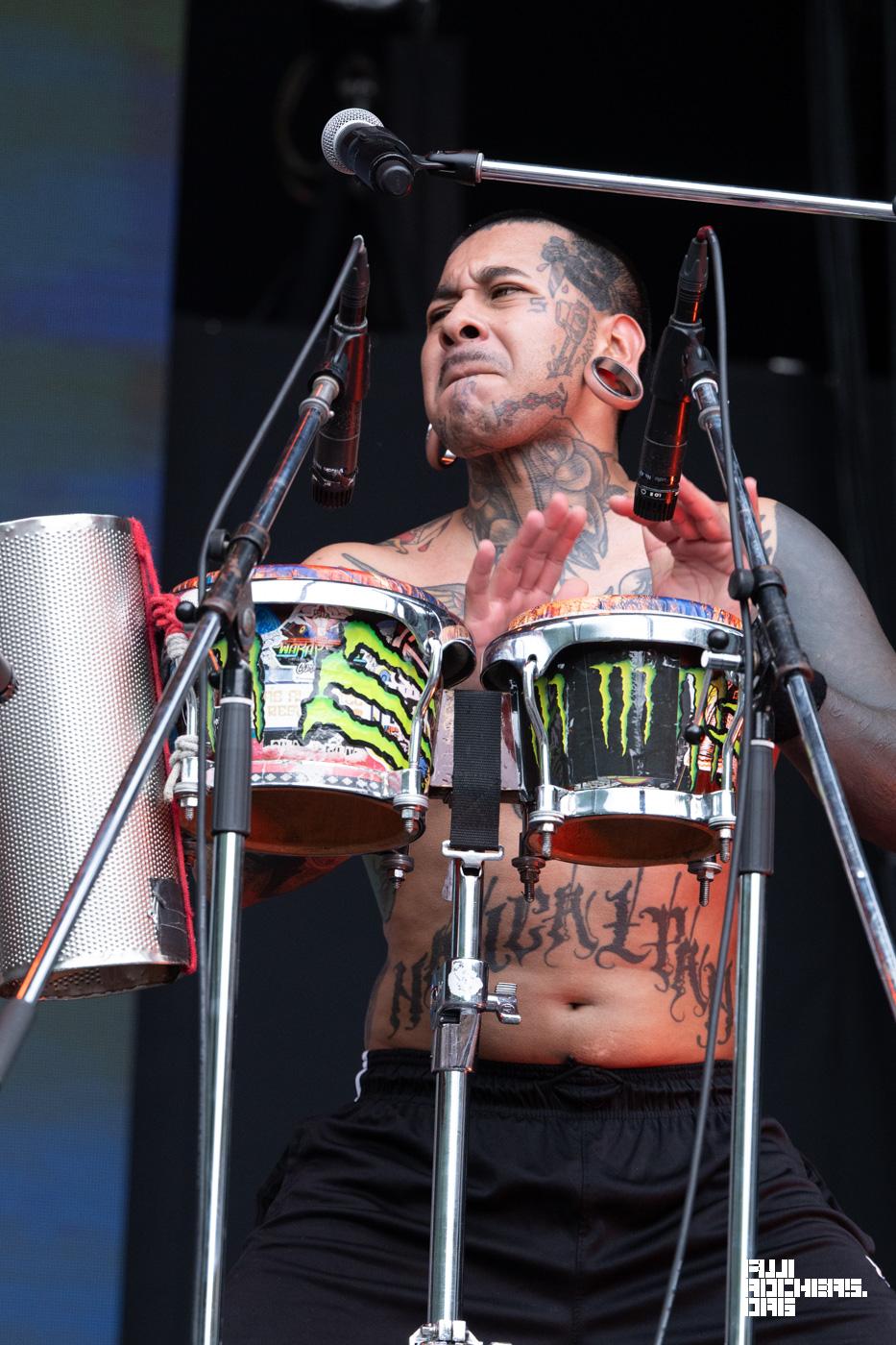
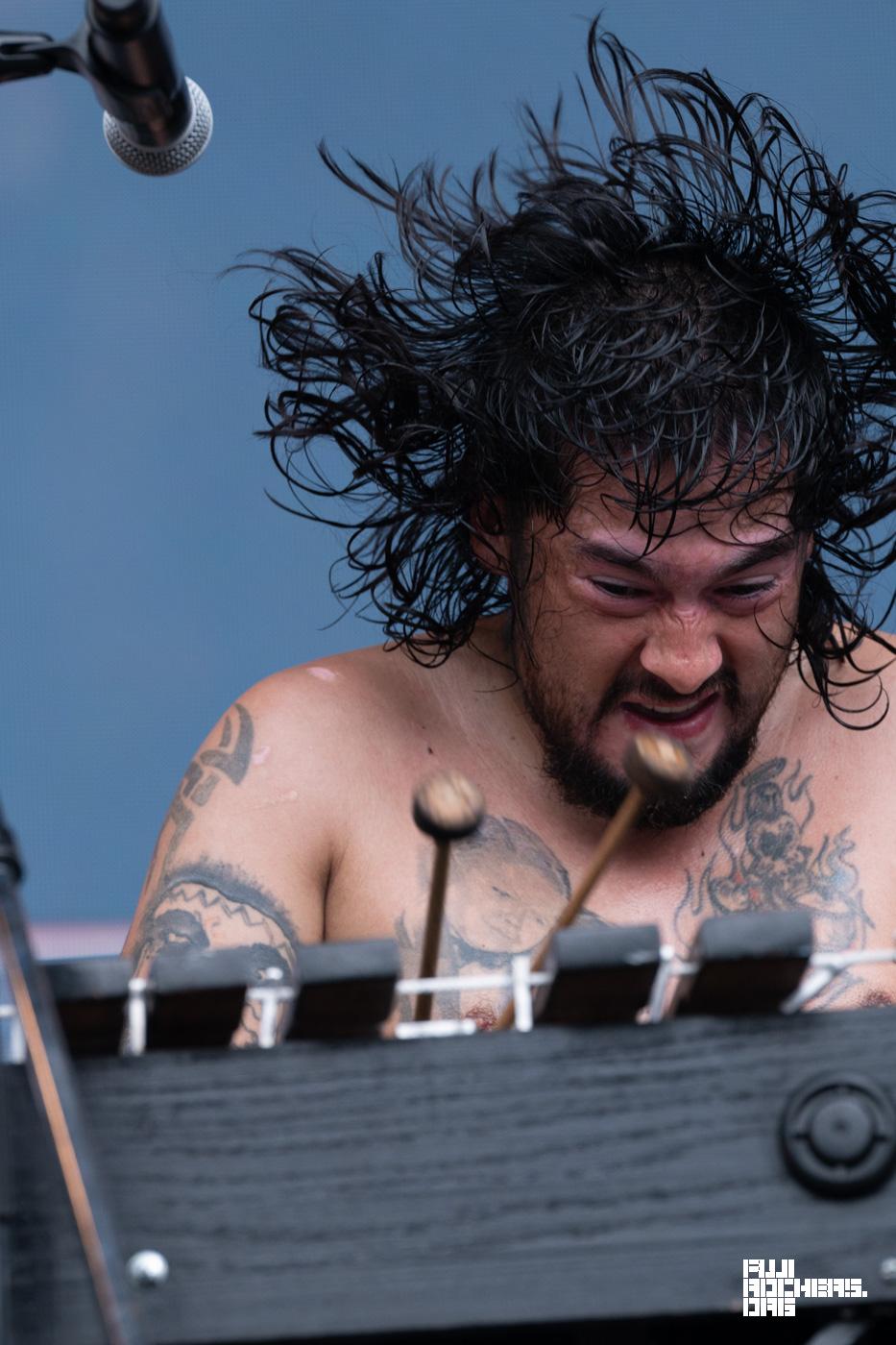
The moment the band bounded onto the stage shouting “¡Hola, amigos!” the crowd sensed this wasn’t going to be an ordinary world music set. Brothers Mongo and Kilos Gama leaned over an enormous marimba to launch into the cumbia classic “Cumbia Buena,” raising glasses and shouting “Kanpai!” in a nod to their Japanese audience.
The marimba—a wooden percussion instrument more commonly associated with traditional folk music across southern Mexico and Central America—became the unlikely centerpiece of a full-scale punk show.
Founded by the Gama brothers, Son Rompe Pera grew up in a family of marimba players in Mexico City. As teenagers, however, they fell in love with punk, ska and rock before eventually discovering they could combine both worlds. The result is a sound that honors traditional cumbia while injecting it with the raw energy of underground punk clubs.
That unlikely fusion has earned them fans well beyond Latin America. They have toured Europe, North America and Asia, collaborated with alternative artists, and become one of the leading acts in the global revival of cumbia.
And cumbia itself is enjoying a renaissance.Originally emerging from Colombia’s Caribbean coast before spreading throughout Latin America, cumbia has been reinvented countless times—from Peru’s psychedelic chicha scene to Argentina’s digital cumbia movement. Son Rompe Pera have pushed it in yet another direction, replacing polished dance arrangements with sweaty mosh pits and distorted guitars.
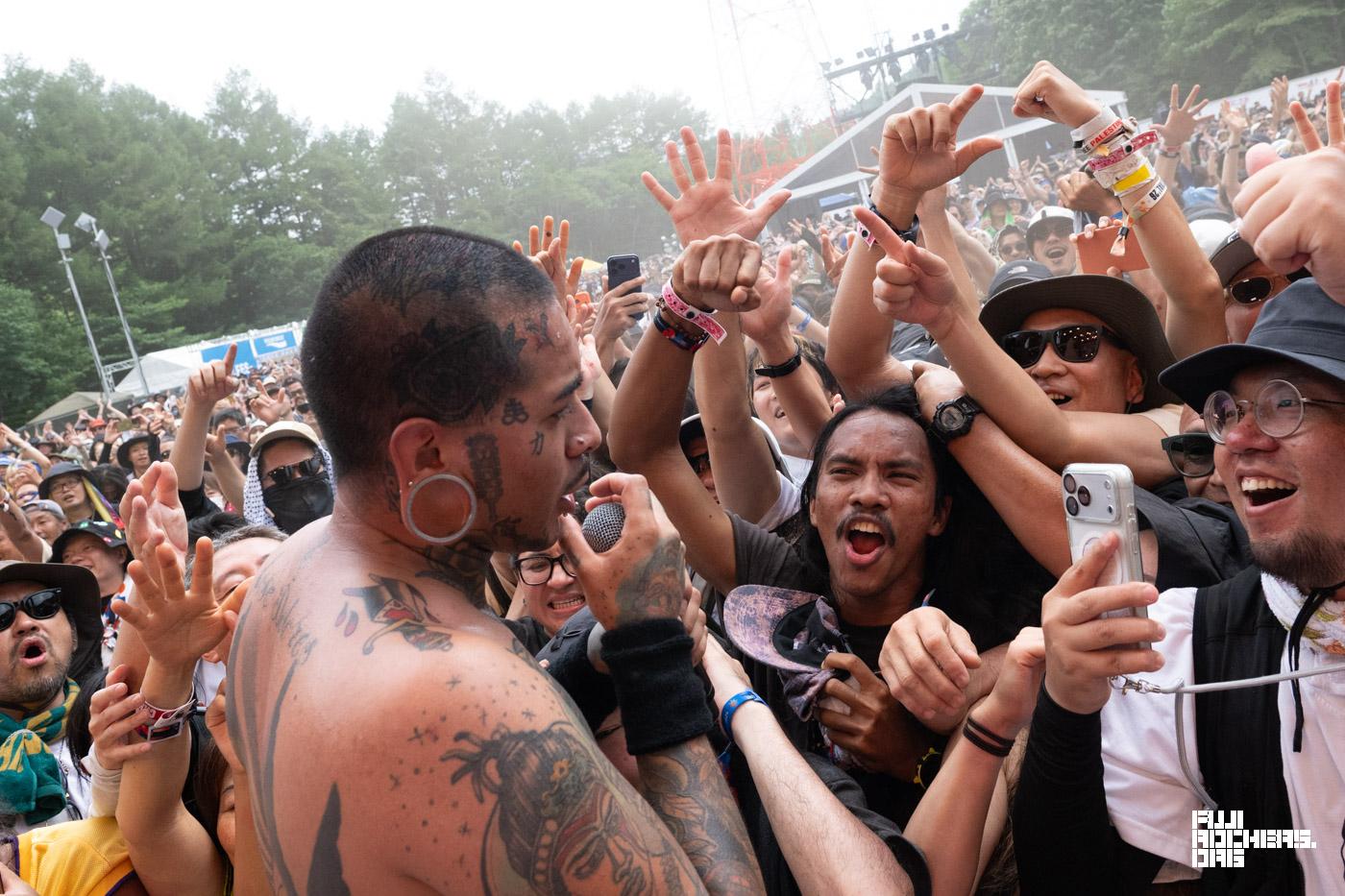
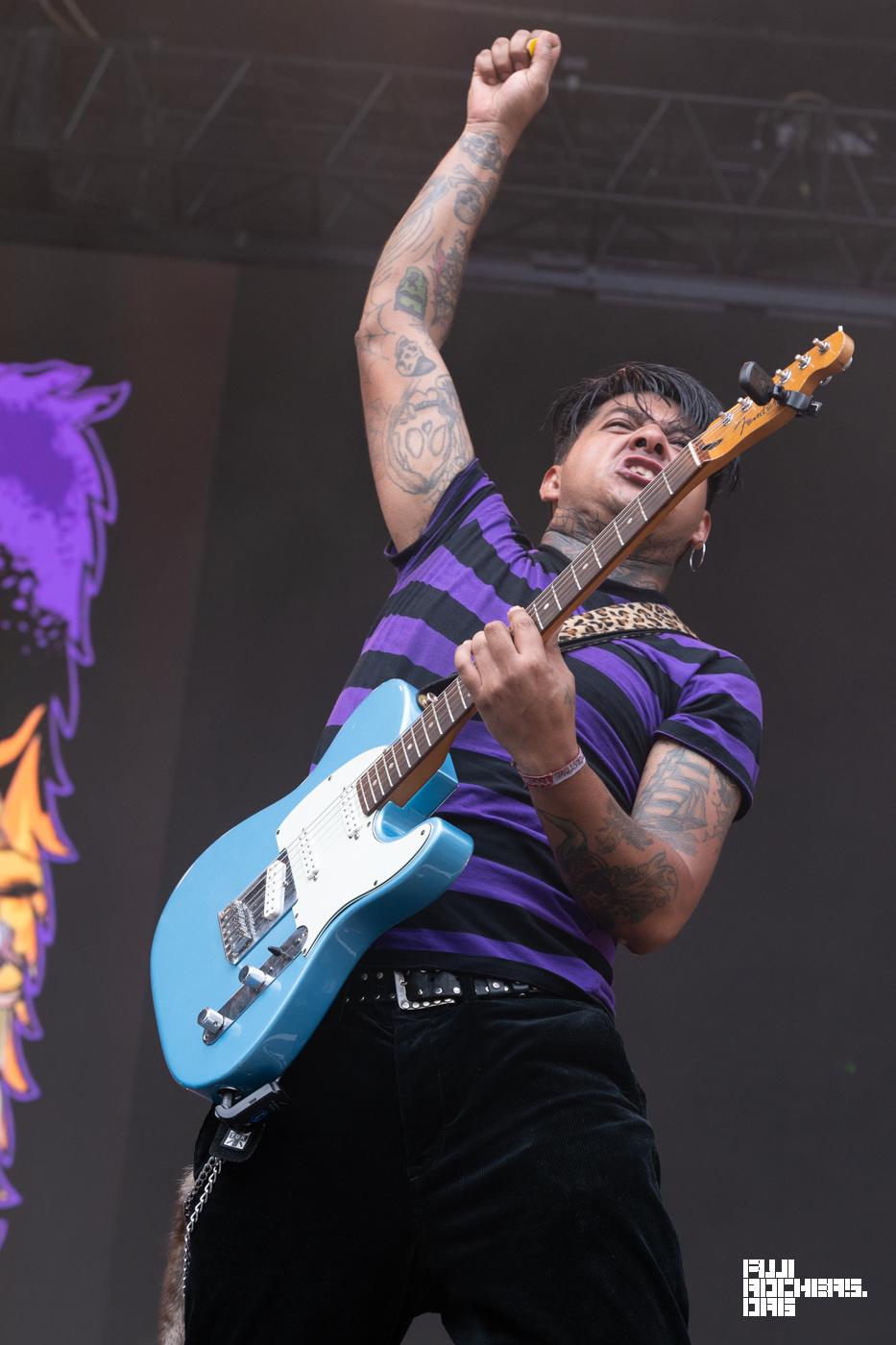
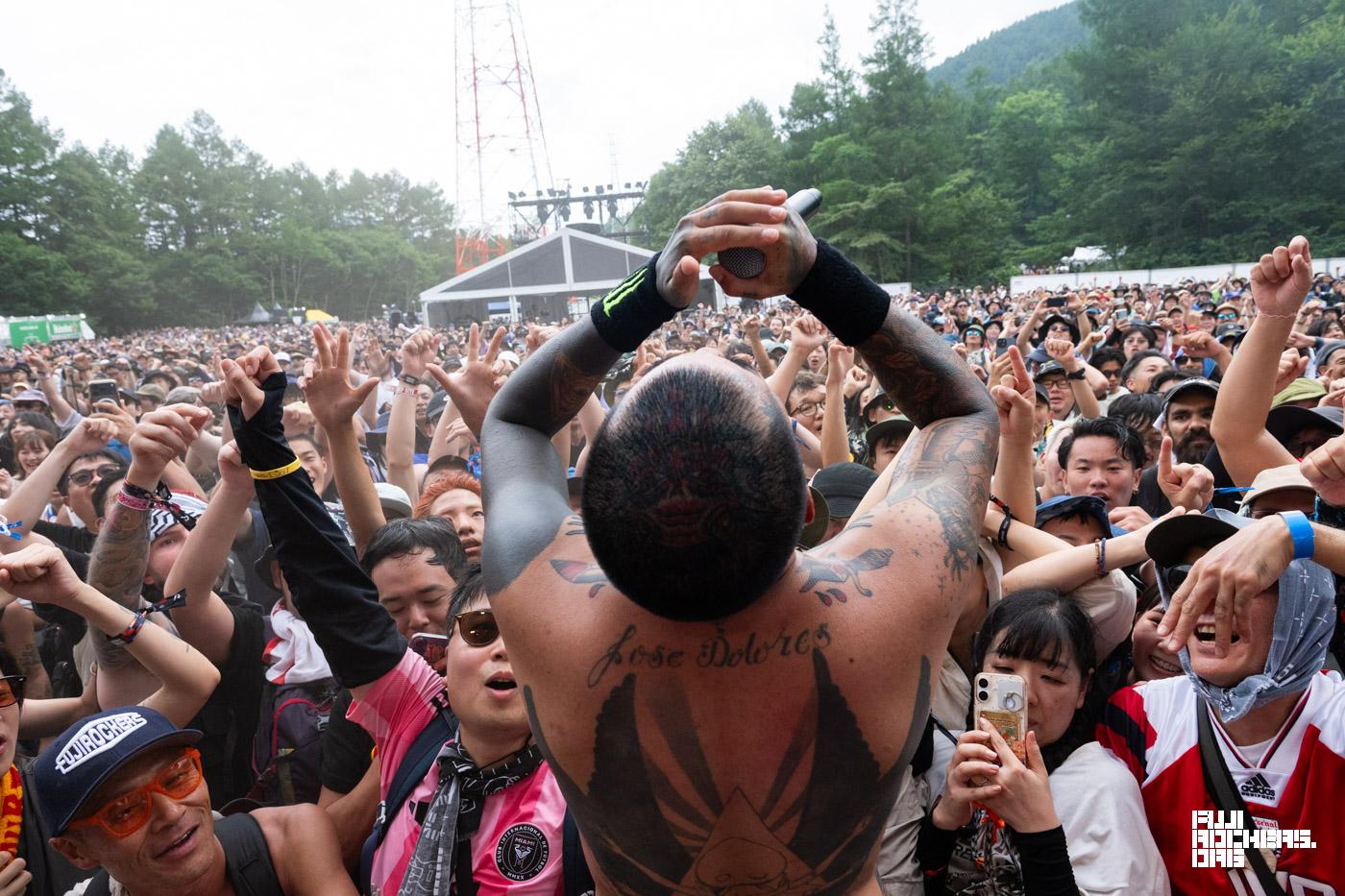
By the time “Cumbia Algarrobera” arrived, vocalist Kacho was already dancing across the stage, urging the audience to move with him. Soon afterward, Kacho and Kilos peeled off their shirts, revealing heavily tattooed torsos as the band’s intensity climbed another level.
One moment the marimba whispered gentle, almost melancholic melodies.
The next, it exploded into frantic rhythms that sounded like The Clash had wandered into a Mexican street carnival.Every acceleration drew louder cheers.
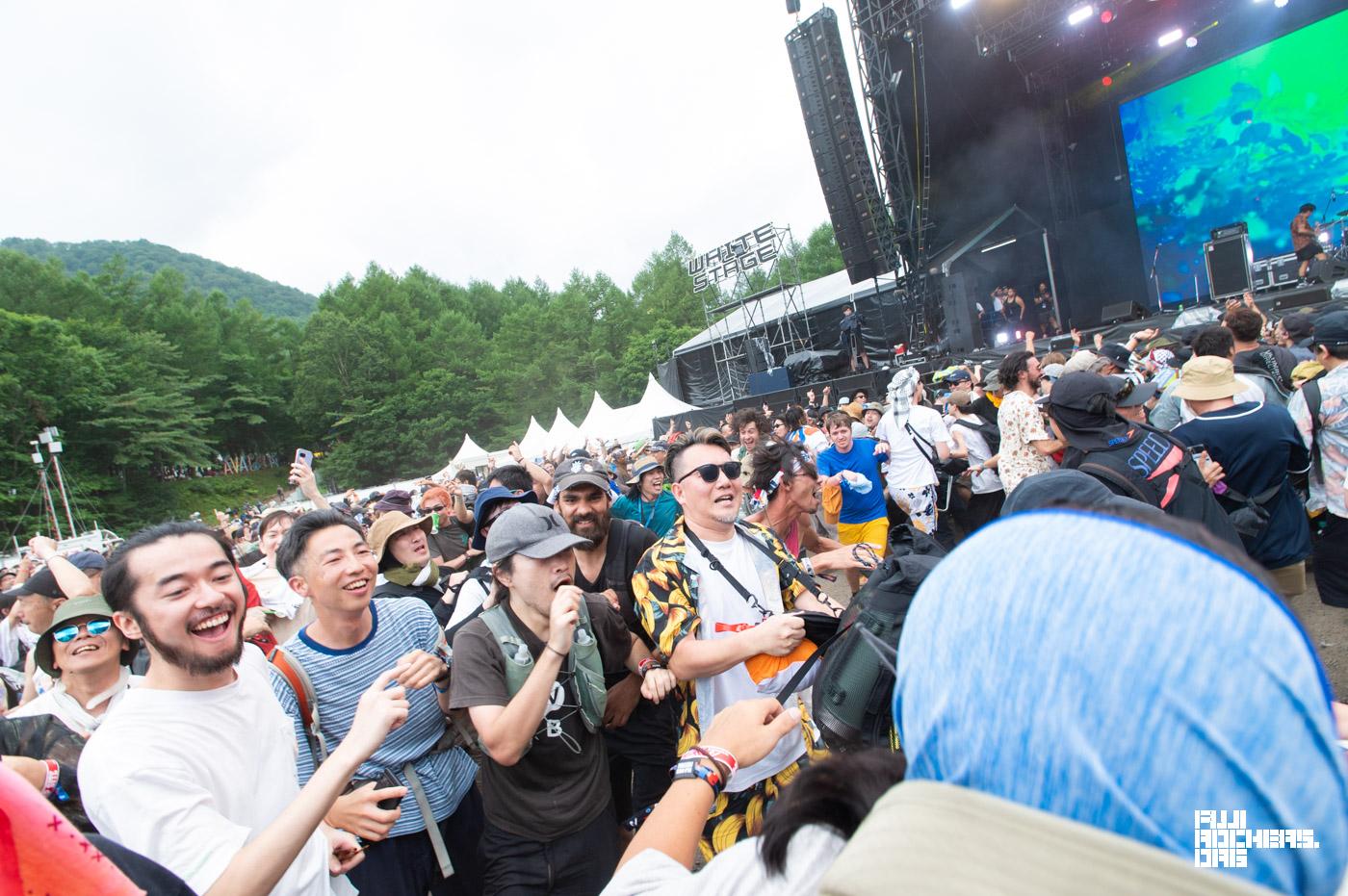
Every tempo change inspired another surge toward the front of the stage.Then came “Nada Que Hacer,” a new song released only days before the festival.As the guitars kicked in, the long-awaited “marimba mosh” erupted.
Bodies collided. Dust billowed into the summer air. Festivalgoers who moments earlier had been swaying suddenly found themselves bouncing shoulder to shoulder.
It felt less like watching a band and more like being swept into a neighborhood celebration somewhere in Mexico City. The chants of “Kanpai!” echoed back and forth between band and audience as more curious festivalgoers streamed toward WHITE STAGE, drawn by the infectious rhythms.
Then came the band’s manifesto. “Cumbia Is the New Punk.” The song has become Son Rompe Pera’s calling card, not because it rejects punk’s past, but because it embraces its original philosophy: anyone can make music, traditions are meant to be challenged, and dancing together can be every bit as revolutionary as smashing a guitar.
As the song reached its frantic climax, frontman Kacho thrust his fist skyward before shouting “¡Gracias!”Hundreds answered with fists of their own.
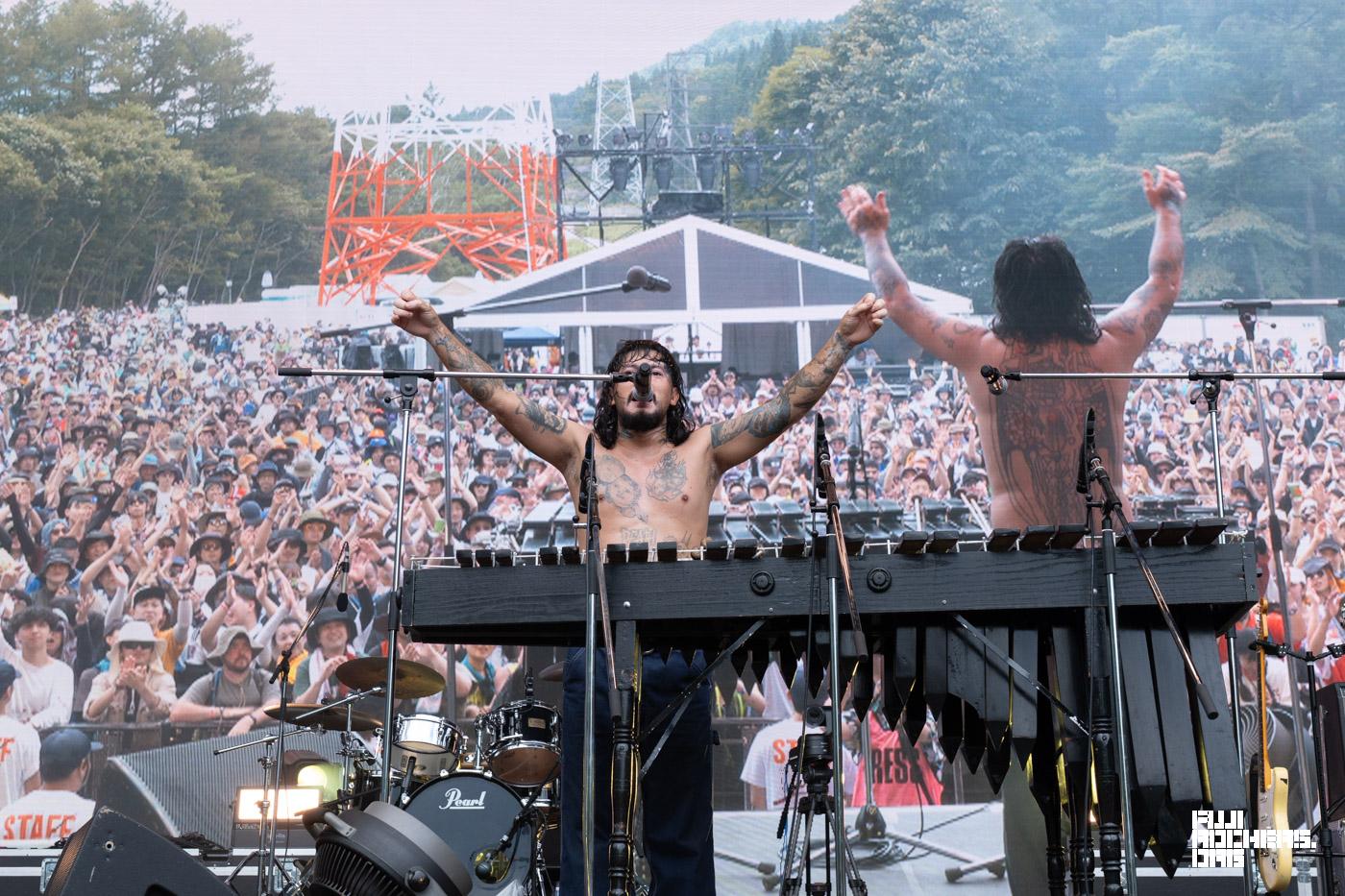
Behind the band, giant video projections unleashed a bizarre parade of monsters including Godzilla, SpaceGodzilla and grotesque cartoon creatures. One grinning snake-like character bore an unmistakable resemblance to US President Donald Trump, adding a dose of political satire to the carnival atmosphere.
The visuals perfectly matched Son Rompe Pera’s music—colorful, chaotic and impossible to ignore.Midway through the performance, the frenzy paused for a deeply personal moment.
Mongo dedicated an emotional marimba solo to his late father, who introduced the brothers to the instrument that now defines their sound.
Without speaking English or Japanese, he let the marimba do the talking.
Switching effortlessly between two mallets in one hand and one in the other, he delivered a performance that drew one of the afternoon’s loudest ovations, reminding everyone that beneath the punk attitude lies extraordinary musicianship.
The respite didn’t last long. “Mosh pit?” Kacho asked, tracing a giant circle in the air.
Instantly, a massive circle pit formed. “¿Estás listo?” (“Are you ready?”)
The answer came in the form of “Chucha,” launching another whirlwind of dancing as guitars, percussion and marimba collided into glorious chaos.
Then came one final instruction.”Crouch down!”Thousands obeyed.For a heartbeat, the entire crowd squatted in silence. Then everyone exploded upward together. Dust flew.
Crowd surfers appeared overhead. Someone shouted the Ramones’ immortal rallying cry:
“Hey! Ho! Let’s Go!” Son Rompe Pera answered by jumping off the stage and playing directly in front of the audience, erasing the final barrier between band and fans.
For the finale, all five musicians lifted the marimba above their heads like a sacred relic.
It was both a tribute to their family’s musical roots and a declaration that this centuries-old instrument still has plenty to say in modern music. As they lined up to bow repeatedly before waving goodbye, one thing had become abundantly clear.
If punk has always been about breaking rules, celebrating outsiders and creating community through music, then Son Rompe Pera may be carrying its spirit further than many traditional punk bands today.
At Fuji Rock, cumbia didn’t just make people dance. For one unforgettable afternoon, cumbia was punk.
[写真:全10枚]